
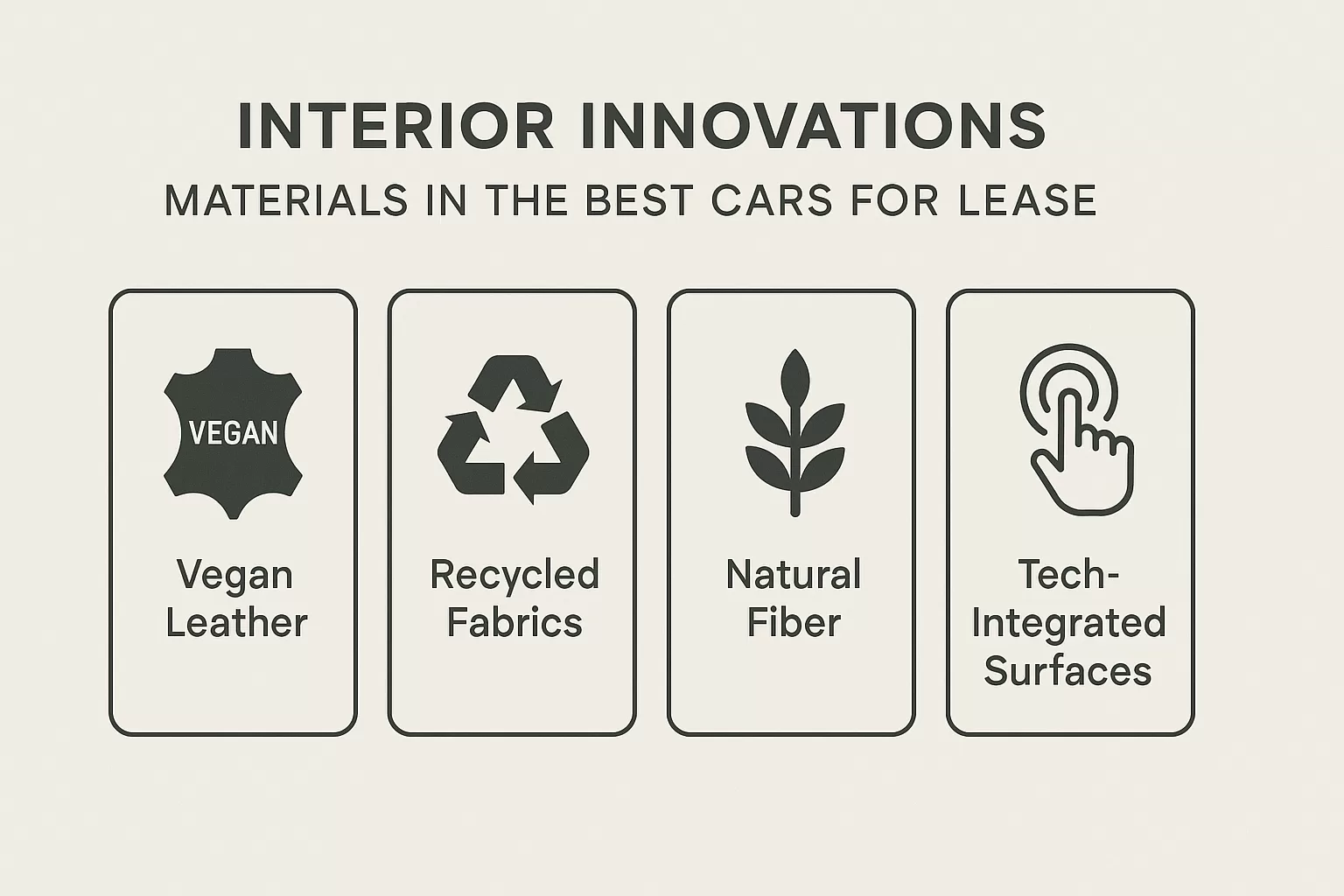
For car lessees, comfort, aesthetics, and durability are just as critical as performance and price. Over the past five years, the automotive industry has seen a transformative shift in the materials used inside vehicles, driven by sustainability trends, tech integration, and consumer preferences. Today’s best cars for lease not only offer superior performance but also feature interior materials that enhance the driving experience in terms of luxury, practicality, and environmental consciousness.
This article explores the evolution of car interior materials from 2020 to 2025, highlighting current innovations, industry trends, and the technologies influencing the materials found in the top leased vehicles today.
The Evolution of Car Interior Materials (2020–2025)
1. From Traditional to Tech-Enhanced
Historically, car interiors relied heavily on:
Natural leather
Plastics and polyurethane
Wood trims (for luxury vehicles)
By 2023 and beyond, carmakers began moving away from animal-based and oil-derived materials, opting instead for recyclable, synthetic, and plant-based options. Automakers are now focused on:
Reducing weight
Improving thermal and acoustic insulation
Enhancing sensory appeal (touch and smell)
Aligning with ESG (Environmental, Social, Governance) standards
According to McKinsey & Company’s Auto Trends 2024, 58% of OEMs have made commitments to sustainable interiors, targeting 50–90% recyclability in new models.
Key Interior Materials Used in Today’s Best Cars for Lease
2. Vegan Leather and Synthetic Alternatives
One of the most notable changes in recent years is the widespread adoption of vegan leather, also known as synthetic leather, leatherette, or eco-leather.
Popular Brands Using It:
Tesla: Fully vegan interiors since 2020
Volvo: All EV models now use leather-free interiors
BMW & Mercedes-Benz: Offer synthetic alternatives in most lease-friendly trims
Benefits:
Lower cost than natural leather
Easier to clean and maintain
Reduces animal-product dependency
According to Allied Market Research (2024), the global vegan leather market is projected to hit $66.3 billion by 2027, driven in part by its application in the auto industry.
3. Recycled PET (Polyethylene Terephthalate) Fabrics
Recycled plastic bottles are now commonly used to create durable seat fabrics and carpets in mid-range and high-end lease vehicles.
Examples:
Ford: Uses REPREVE® fiber made from recycled PET bottles in the Ford Escape and Focus
Hyundai: IONIQ 5 features recycled plastics and bio-based PET blends
BMW i Series: Features Seaqual yarns made from marine plastic waste
On average, each vehicle contains material from 45–100 recycled bottles, according to Ford’s sustainability report (2023).
4. Natural Fiber Blends (Wool, Bamboo, Cork, Hemp)
Luxury and eco-conscious brands are embracing natural materials as tactile, breathable, and sustainable alternatives to synthetic blends.
Key Applications:
Mini Cooper SE: Features wool-blend upholstery
Mazda MX-30: Uses cork (a nod to Mazda’s origins) for center consoles
Toyota Prius: Includes plant-based materials in its dashboard components
Natural fibers offer thermal comfort, improve air quality by reducing VOC emissions, and appeal to green-conscious lessees.
5. Alcantara and Suede-Like Materials
Alcantara, a premium synthetic suede, has become popular in sports and luxury models. It offers a soft touch, grip for performance seats, and upscale aesthetics.
Common in:
Audi S and RS models
Lexus F Sport trims
Porsche Macan and Taycan leases
Alcantara S.p.A reports that over 60% of premium OEMs globally use Alcantara in performance-oriented lease vehicles.
6. Infotainment & Tech-Integrated Materials
Modern leasing favorites are increasingly defined by technology embedded into surfaces:
Haptic feedback dashboards (Mercedes EQ series)
Ambient lighting woven into panel materials (BMW 7 Series)
Smart glass and touch-reactive trims (Lucid Air)
These materials are usually paired with soft-touch polymers and hybrid composites that balance tactile comfort with functional innovation.
Interior Material Trends by Vehicle Segment
7. Compact and Mid-Size Sedans (Best Budget Lease Options)
Leased models like the Toyota Camry, Honda Accord, and Hyundai Elantra typically include:
Fabric seats made from recycled polyester
Faux leather trims in higher trims
Matte plastic and brushed metal accents
These materials are cost-effective yet durable—important for high-volume lease fleets.
8. SUVs and Crossovers (Most Popular Lease Class)
Lease leaders like the Ford Escape, Kia Sportage, and Mazda CX-5 offer:
SofTex®, leatherette, or vegan leather seats
Cargo areas with washable, recycled thermoplastic liners
Optional suede-like or Alcantara accents in sport trims
According to Experian Automotive (2025), 57% of all new leases in the U.S. are for SUVs or crossovers—driving a surge in high-quality synthetic materials.
9. EVs and Luxury Leases
The Lucid Air, Tesla Model Y, BMW iX, and Mercedes EQS are redefining what premium, eco-conscious interiors look like.
Expect:
All-vegan interiors
Bamboo and wool seats
OLED-embedded dashboards
Advanced sound-absorbing recycled foam
J.D. Power’s 2025 report notes that 73% of EV lessees prefer non-leather interiors, citing comfort and ethical sourcing.
How Interior Materials Influence Lease Value
10. Residual Value Considerations
Interior materials affect a vehicle’s residual value, a key factor in lease pricing. Materials that resist wear and are easy to clean tend to retain more value at lease-end.
High-Value Materials:
Synthetic leather with stain protection
Durable recycled PET fabrics
Trim-resistant polymers
Factors Considered by Lessors:
Fade resistance
Stain and odor retention
Appearance after 24–36 months
ALG (Automotive Lease Guide) suggests that vehicles with synthetic leather retain 8–12% more value than those with basic cloth interiors after three years.
11. Consumer Preferences and Leasing Decisions
Interior comfort ranks as a top-three consideration for lease customers after fuel efficiency and monthly cost.
A 2024 Cox Automotive Survey showed:
64% of lease customers consider seat material quality
41% prefer vegan or non-leather options
33% will pay more monthly for eco-friendly interior packages
Leasing companies increasingly bundle high-quality interior features with premium trims to meet consumer expectations.
The Future of Interior Materials (2025 and Beyond)
12. Next-Gen Developments to Watch
Emerging technologies are set to redefine what’s possible inside the best cars for lease:
Self-healing materials: Repairs minor scratches and scuffs autonomously
OLED dashboard fabrics: Turn upholstery into a display
Biometric-reactive surfaces: Adjust comfort and lighting based on stress and heart rate
100% plant-based leather: Derived from pineapple, cactus, or mushroom (already in pilot by BMW and Mercedes)
Conclusion
Over the past five years, the interiors of the best cars for lease have transitioned from traditional luxury cues to modern, sustainable, and tech-forward experiences. With innovations ranging from vegan leather and recycled fabrics to smart dashboards, today’s leased vehicles provide not only function and style but also align with values like sustainability, wellness, and future readiness.
Whether you’re an individual lessee or a fleet manager, understanding these materials can help you make smarter, more durable, and future-proof leasing choices.
For any questions regarding auto leasing in New York call us at (718) 313-0044 or check our Car Lease Deals Online
Sources and References
McKinsey & Company – The Road to 2030: Trends Shaping the Automotive Interior Materials Market (2024)
Cox Automotive – 2024 Lease Consumer Insights Report
Ford Motor Company – Sustainability Report, 2023
Allied Market Research – Vegan Leather Market Forecast to 2027
Experian Automotive – State of the Leasing Market, Q1 2025
Automotive Lease Guide (ALG) – Vehicle Residual Value Rankings, 2025
Disclaimer
The information provided on this website, including articles, images, statistics, and references, is intended for informational and educational purposes only.
Presidential Auto Leasing & Sales strives to ensure that all information is accurate and up to date at the time of publication. However, we make no guarantees regarding the completeness, reliability, or accuracy of any content.
This website and its content do not constitute financial or legal advice, nor do they represent an offer or commitment to lease, sell, or finance any specific vehicle. Lease terms, pricing, and incentives may vary by manufacturer, location, and credit approval.
All images used on this website are either:
Owned by Presidential Auto Leasing & Sales,
Licensed for commercial use, or
Used under fair use for commentary, education, or news reporting, with proper attribution when applicable.
If you believe that any image or material on this site infringes on copyright, please contact us immediately at info@presidnetialautony.com, and we will review and take appropriate action.
About Presidential Auto Leasing & Sales
Presidential Auto Leasing & Sales is a licensed automotive broker serving New York, New Jersey, Connecticut, and Pennsylvania. We specialize in new vehicle leasing, financing assistance, and personalized customer service. Our mission is to make car leasing simple, transparent, and affordable for every driver.
For more information, call us at (718) 313-0044.